
Your cart is empty now.
Your search for "gods emissaries." revealed the following:
Volume thirty-six provides an in-depth commentary on five Qur’ānic chapters: Sūras Muḥammad (Chapter 47), al-Fatḥ (Chapter 48), al-Ḥujurāt (Chapter 49), Qāf (Chapter 50), and al-Dhāriyāt (Chapter 51). These chapters explore themes of faith, divine mercy, societal ethics, resurrection, and divine justice, offering insights into the Prophet Muḥammad’s mission and the responsibilities of believers. In Sūrah Muḥammad, the chapter contrasts the qualities and actions of the faithful with those of the faithless, examining their ultimate fates. ʿAllāmah emphasizes the consequences of hypocrisy and disobedience while warning believers against inclining toward the disbelievers. The chapter also discusses the rules of warfare and the importance of striving for the preservation of divine truth. Sūrah al-Fatḥ recounts the events surrounding the Treaty of Ḥudaybiyyah and emphasizes God’s favor upon His Messenger and the faithful. ʿAllāmah reflects on the spiritual significance of this “clear victory” and the promise of divine reward for those who demonstrate faith and righteousness. The chapter concludes by highlighting the noble qualities of the Prophet Muḥammad and his companions, as described in the Torah and Gospel. The commentary on Sūrah al-Ḥujurāt delves into the ethical and social teachings of Islam, including proper etiquette with God and His Messenger, interpersonal interactions within a community, and the criteria for superiority among individuals.
This volume provides commentary on Sūrah al-Zumar (Chapter 39), Sūrah Ghāfir (Chapter 40), and Sūrah Fuṣṣilat (Chapter 41), focusing on monotheism, divine justice, and resurrection.
In Sūrah al-Zumar, the emphasis is on sincere worship of God, contrasting the fate of believers and disbelievers. The vivid portrayal of the Day of Judgment highlights the consequences of rejecting divine guidance and idolatry.
Sūrah Ghāfir examines the story of the “believer from Pharaoh’s clan” who supported Prophet Moses, symbolizing courage and conviction. Discussions on intercession and ultimate accountability emphasize divine mercy and retribution.
In Sūrah Fuṣṣilat, the Qur’anic revelation is presented as clear guidance for the Prophet’s people. Reflections on idolaters’ rejection, demands for miracles, and the inevitability of resurrection underscore the unity of divine attributes and the signs of God in nature.
Philosophical insights into idolatry, divine justice, and the ethical dimensions of belief are seamlessly integrated with historical context and exegetical analysis. This volume provides profound lessons on faith, morality, and divine guidance, offering timeless relevance to the challenges of the Prophet’s mission.
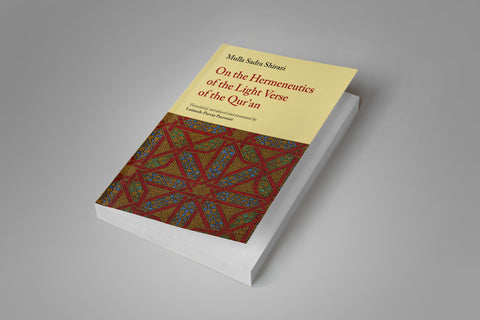
‘Allah is the light of the heavens and the earth. His light is like a niche, within it a lamp; the lamp enclosed in glass, the glass like a brilliant star lit from a blessed olive tree, neither of the east nor west, whose oil would almost glow though fire touched it not. Light upon light!…’ [Qurʾan, 24:35]
The ‘Light Verse’ has evoked numerous interpretations throughout the centuries. Here, Mulla Sadra devotes an entire book of his Qurʾanic commentary to this verse, exploring the meaning of the divine light through metaphysics, ontology, epistemology, psychology, spiritual wayfaring, and traditional Qurʾanic interpretation. Inspiring reading in and of itself, this spiritually uplifting book has also been used as a textbook in university courses on Qurʾanic exegesis and Muslim philosophy.
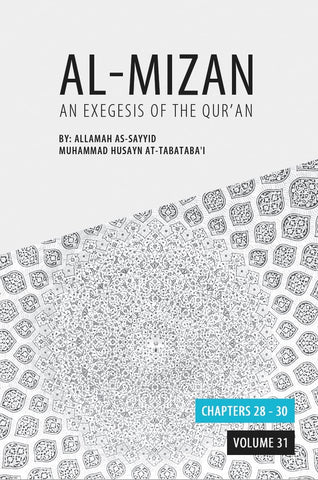
Volume thirty-one offers a detailed commentary on Sūrah al-Qaṣaṣ (Chapter 28), Sūrah al-ʿAnkabūt (Chapter 29), and Sūrah al-Rūm (Chapter 30). These chapters explore themes of divine justice, human accountability, historical reflection, and spiritual resilience. In Sūrah al-Qaṣaṣ, ʿAllāmah explores the story of Prophet Moses (a.s.), illustrating his early life, his calling as a prophet, and his eventual confrontation with Pharaoh. This narrative serves as a powerful example of divine intervention and the triumph of faith over tyranny. The commentary emphasizes the themes of patience and reliance on God, particularly during trials and oppression. ʿAllāmah reflects on the Qurʾānic parallels between the struggles of Moses and the plight of the early Muslims in Mecca, offering hope and reassurance to believers. The commentary transitions into the broader lessons derived from the story of Moses, such as the necessity of divine guidance and the inevitability of justice. ʿAllāmah addresses the philosophical implications of free will and predestination, illustrating how the Qurʾān reconciles these concepts with human accountability. He also critiques the materialistic worldview of Pharaoh and his followers, contrasting it with the spiritual perspective advocated by the Qurʾān. In Sūrah al-ʿAnkabūt, the chapter’s opening verses underline the trials faced by believers, asserting that faith must be tested for its sincerity. ʿAllāmah examines the historical narratives of past communities, such as the people of Nūḥ, Abraham, and Lūṭ, drawing lessons about the consequences of rejecting divine guidance.
Tafsir Al-Mizan Volume 23
Volume twenty-three continues the exploration of the Qurʾānic message with the commentary on Sūrah Ibrahim (Chapter 14) and Sūrah al-Ḥijr (Chapter 15). This volume provides profound insights into themes of monotheism, divine guidance, human responsibility, and eschatological realities. The commentary on Sūrah Ibrahim examines its verses (1–52), highlighting its focus...
In The Name of God, The Most Merciful, The Most Beneficent
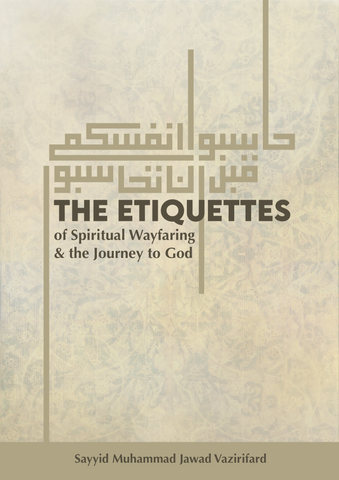
The story of this book begins with the great mystic, philosopher, and commentator of the Holy Qur’an, Allamah Sayyid Muhammad Husayn Tabataba’i. Although best known for his Tafsir al-Mizan, the heritage he bequeathed to those wishing to travel the spiritual path is no less significant. While many of Allamah’s works have made their way into the English corpus, we have yet to benefit from the treasures of one of his students, Ayatullah Ali Pahlawani Tehrani, better known as Ayatullah Sa’adat Parwar.
“The Etiquettes” consists of a letter written by Ayatullah Sa’adat Parwar and a commentary on that letter authored by his student, Hujjatul Islam wal Muslimeen Dr. Sayyid Muhammad Jawad Vazirifard. A unique characteristic of this book is that it can assist a person at any stage of his or her spiritual journey.

Al-Kafi is the most comprehensive collection of traditions from the formative period of Shi‘i scholarship. It is the fruit of Shaykh al-Kulayni’s lifelong labor to collect, vet, sort and compile traditions from Prophet Muhammad and his family. Its 35 books and more than 15,000 traditions cover the full gamut of Islamic knowledge, and it has been a primary source for the Shi‘ah ever since the beginning of the Major Occultation.
ITI’s work offers not only a precise translation of the text of al-Kafi, but a detailed commentary that aims to uncover each tradition’s meaning and implications and to place it in the broader context of Islamic teachings. The goal is to make the traditions accessible to non-specialists and to help them find guidance through the traditions.
Book III: God and His Oneness documents the history of debates around God’s existence and His attributes and helps us to know how to think about God and how not to think about Him.

Suggested Age: Preteen-Teen
Our first ever graphic novel surrounding the stories and lives of the 14 ma'soomeen and what their name means.

Volume seven continues the commentary on Sūrah Āl ʿImrān (Chapter 3) from verses 121–200, addressing themes such as the Battle of Uḥud, social and ethical lessons for the Muslim community, and reflections on divine guidance. It also begins the commentary on Sūrah al-Nisāʿ (Chapter 4) with verse 1, delving into the origins and unity of humanity. This volume opens with discussions on the Battle of Uḥud, exploring the causes of the Muslims’ setback and their subsequent recovery. ʿAllāmah Ṭabāṭabaʿī emphasizes the lessons of steadfastness, trust in God, and the importance of collective unity in the face of adversity (verses 121–129). The ethical and spiritual dimensions of divine forgiveness and mercy are further explored (verses 149–164), highlighting the centrality of repentance and reliance on God.
Translation missing: en.general.search.loading