
Your cart is empty now.
Your search for "gods emissaries." revealed the following:
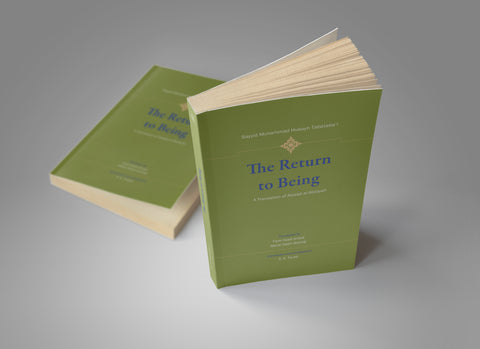
The Return to Being tells the story of the journey of the human soul from the material to the divine. Reminding the reader of the true nature of reality, Sayyid Muhammad Husayn Tabataba’i shows how even ordinary people can reach the pinnacle of spiritual perfection. Helpful indices of Qurʾanic verses and the Arabic text of hadith texts cited complement this inspiring, spiritual work.
Sayyid Muhammad Husayn Tabataba’i (1904-1981) was born in Tabriz, Azerbaijan. He authored the renowned twenty-volume Qurʾanic commentary al-Mizān fī Tafsīr al-Qurʾān as well as several groundbreaking works on Islamic philosophy and mysticism. Additionally, he wrote numerous books on Shiʿa history and doctrine to bring about a better understanding of Shiʿism throughout the world. His writings have been translated into English and numerous other languages.
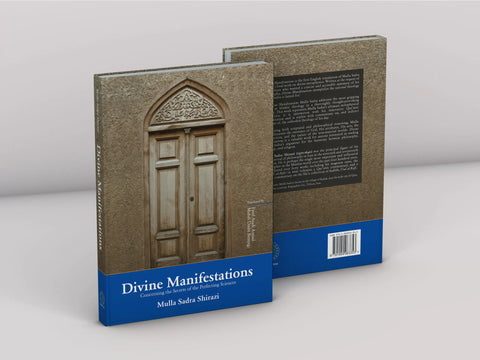
Divine Manifestations (Al-Mazahir al-Ilahiyyah fi Asrar al-‘Ulum al-Kamaliyyah) is the first English translation of Mulla Sadra Shirazi’s final work on divine metaphysics. Written at the request of his students who wanted a concise and accessible summary of his philosophy, Divine Manifestations exemplifies the rational theology Mulla Sadra is famed for. In Divine Manifestations, Mulla Sadra addresses the most gripping topics in Islamic theology in a thoroughly thought-provoking manner. This work represents Mulla Sadra’s ultimate metaphysical perspective; it is interwoven with his innovative Qurʾanic interpretation and is replete with commentary on, and indirect criticism of, the orthodox theology of his day. Combining both scriptural and philosophical reasoning, Mulla Sadra discusses the existence of God, His attributes, His acts, the Resurrection, and the nature of the non-material worlds. Divine Manifestations is a valuable work for anyone interested in reading Mulla Sadra’s argument for the harmony between philosophy, theology, and religion. Complete with extensive commentary in the classical style by later Islamic scholars, it is an ideal first read in Sadra’s philosophy.
One of the greatest philosophers in Islamic history, Mulla Sadra (1571-1640) founded the transcendental school of philosophy (al-ḥikmat al-mutaʿāliyah). Born in Shiraz, Iran, he taught philosophy for many years under the auspices of the Safavid government before retiring to the village of Kahak for a fifteen-year retreat. During this time, he formulated his signature approach to philosophy, theology, hadith, and Qurʾanic exegesis – an approach which remains influential to the present day.

This book deals with the comprehensive research about the precious life of the Lord of Worshippers.

Vol 1 - Introduction and sermon 1
The “Beacon of Guidance on the Heights of Eloquence” is an English translation of a commentary written by Ayatollah Makarem Shirazi on the esteemed collection of Amir al-Mu’min Ali’s words called the “Nahj al-Balāghah”. The present volume includes the text of sermon one and its commentary, which is largely about God's creation of the universe.
Tafsir Al-Mizan Volume 13
The volume begins by affirming the unity of God as the Creator of the heavens and the earth, the darkness and the light (verses 1–3). ʿAllāmah Ṭabāṭabaʿī elaborates on the systematic nature of creation, emphasizing its reflection of God’s oneness and the absurdity of associating partners with Him. This forms...
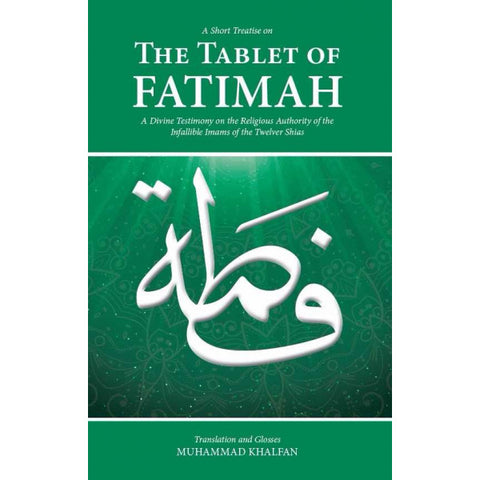
The Prophet (s) received the Tablet, a letter of wisdom and power, from Gabriel in the form of emerald, which he gifted to his beloved daughter, who became the source of its communication to future generations. The document introduces the guardian of the religion and talks about the tumultuous events that would unfold during their lifetime. Despite its brevity, the document contains an ocean of meaning.

Part of the Islamic Reference Series books by Shaykh Dr. Mohammad Ali Shomali.

This book was originally published as "The Message."
In spite of his humble circumstances as a poor orphan, Muhammad was sent by God as His final Messenger to humanity. His prophetic career of little more than two decades changed the face of world history. He called the peoples of the world to the worship of the One God, “Lord of all beings.” He laid the foundations of the richest and most universal civilization in human history. Islamic civilization grew out of the Prophet Muhammad's universal call to the faith in the One God (tawhid), and the brotherhood of all believers in Him. The Prophet of Islam perfected the same message which was preached by earlier prophets of God, such as Abraham, the spiritual ancestor of all monotheists and physical father of Muslims and Jews, and Moses and Jesus, on whom may there be peace.

A summary of life and struggles of Imam Khomeini, inclusive of his politico-Divine will.

A collection of short stories from the life of the Holy Prophet Muhammad, “Tales of the Last Messenger.”
Over 65 Stories from Tales of the Last Messenger are categorized into the following chapters:
Kindness is Part of Faith
Remembering Allah & His Lessons
Developing Good Character
Treating Others Fairly & Justly
Respecting the Rights of Children
Translation missing: en.general.search.loading