
Your cart is empty now.
Your search for "gods emissaries." revealed the following:

No doubt, the greatest service in the station of servitude (Ôub_diyyah) is to propagate, disseminate and state the concepts, gnosis, truths, and decrees of the Noble QurÕan and the words and traditions reported from the prophets and pure and immaculate saints (awliy_Õ) (Ôa). Of course, this must be done while observing all the conditions and necessary features so that the divine truths do not deviate from their own course, and what are meant and implied in those words be clarified, understood and implemented.
In this treatise, ÔAllamah Mustafawi points out, and then discusses and investigates, the necessary conditions and features which must be faithfully observed and carefully considered in the pursuit of translation, exegesis, elucidation, and explanation of the verses of the Noble QurÕan and the holy traditions and narrations. And since its author has also works on the exegesis of the Noble QurÕan and _ad_th, he also discusses and examines those works as much as they are related to the subjects of the treatise.

With remarkable breadth of vision, Seyyed Hossein Nasr reveals for both Western and Muslim readers how each art form in the islamic tradition is based upon a science of nature concerned, not with the outer appearance of things, but with their inner reality. Ranging across calligraphy, painting, architecture, literature, music, and the plastic arts, Nasr penetrates to the inner dimension of Islam and shows the role art plays in the life of individual Muslims and the community as a whole--the role of inspiring the remembrance and contemplation of God.
Once the author establishes art as an aid and support to the spiritual life, he traces the creative act to its ultimate source: inner knowledge and barakah, or grace, which make the crystallization of inner realities in form and space and time possible. Through this knowledge and grace, the author asserts, unity manifests upon the plane of multiplicity, making archetypal realities perceivable by the senses. Through this knowledge and grace, art functions as a ladder for the journey of the soul from the visible to the invisible. How Islamic art leads man to the inner chamber of divine revelation forms the substance of much of this important work.
An especially close look is given to the Sufi tradition within Islam, for its mystical teachers have often clearly demonstrated in their works the spiritual significance of beauty and served as the source of inspiration for art.
By rediscovering the root of art in the Islamic tradition, Seyyed Hossein Nasr opens doors to new dimensions of unity which have seemingly been obscured in recent Western art. In so doing, he extends the significance of this book beyond the Islamic belief system to touch the hearts and creative impulses of readers from all traditions.
Seyyed Hossein Nasr is currently University Professor of Islamic Studies at George Washington University. Born in Tehran and educated at MIT and Harvard, he was previously professor of the history of science and philosophy at Tehran University and first president of the Iranian Academy of Philosophy. He has taught throughout America, Europe, the Middle East, Pakistan, India, Japan, and Australia. He is the author of over twenty books in English. Among them are Sufi Essays, Islamic Life and Thought, Knowledge and the Sacred, and Three Muslim Sages.
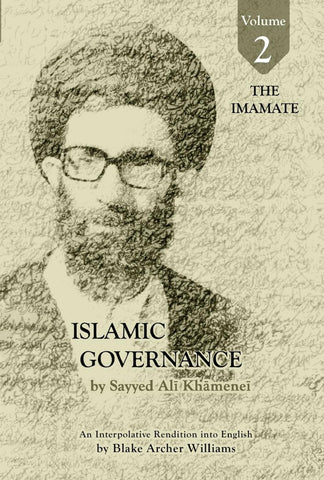
The four volumes of Ayatollah Khamenei's Islamic Governance provide the theoretical framework for authentic Islamic governance in the modern era that is deeply rooted in Islamic principles and in what makes us human. Authored by one of the foremost theoreticians and practitioners of the revolutionary Islamic movement that culminated in the triumph of the Islamic Revolution in Iran, the book provides a genuine alternative both to the morally bankrupt liberal social order of the West, as well as to the defunct and sterile alternatives provided within the rest of the Islamic world.
Volume Two: The Imamate
The Imamate begins with commentaries on two scriptural proofs for the Imamate: the Sermon of Ghadir Khumm and the Hadīth of the Two Weighty Trusts. Ayatollah Khamenei then provides a survey of various approaches that have been taken to the issue of leadership, including a discussion concerning the necessity of the imamate, the succession to the prophet, and the characteristics and functions of the imam. The volume closes with a chapter on Illegitimate Governance (Taghut), and a chapter on Divinely-Sanctioned Authority & Governance. The reader will develop a contextual understanding of the concept of authentic Islamic leadership and how its absence can lead to many of the injustices of history.

Translated by Ali Quli Qara’i
This book was originally written by the great Muslim thinker and reformer Āyatullāh Murtaḍā Muṭahharī on Mysticism for B.A. students at the faculty of theology of the University of Tehran. The original book was published after Muṭahharī’s martyrdom
A succinct yet deep exposition of the principles of Islamic theology are discussed such as a brief history of ʻilm al kalām and its various schools (Shīʻites, Muʻtazilites and Ashʻarites), the doctrines of tawḥīd, divine justice, retribution, free will and freedom, independence and validity of reason, the vision of God, the infallibility of the prophets and the Imāms, intercession and more.
The reader will get a concise picture of the foundational aspects of Islamic theology that can lead to further inquiry.

أحيّي هذا الكاتب الموهوب، وأولئك الـثلاثة والعشرين فتًى، واليد القديرة الحكيمة المبتكرة والصانعة للمعجزات التي صاغت كل هذا الجمال وأشكر الله وأسجد لله شكرًا على ذلك.


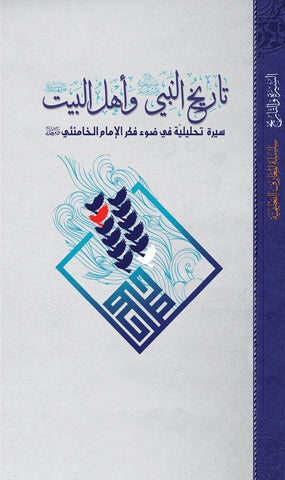
الكتاب الحاضر (تاريخ النبي و أهل البيت) قبل أن يكون كتاباً تاريخيّاً صرفاً، هو متن تحليليّ تاريخي، يتضمّن بالاضافة إلى السرد والشرح التاريخيّ لوقائع من حياة الأئمّة الأطهار عليهم السلام، طرحاً وبياناً رؤيةً تحليلية كلّيّة لحياة كلّ معصوم بالنظر إلى المسار التاريخيّ لمرحلة إمامته، وفي إطار رؤية متكاملة ومترابطة مع باقي الأئمة الأطهار، بحيث غدت سيرتهم عليهم السلام بمثابة عرض منسجم ومترابط لحركة واحدة متّصلة ومتواصلة نحو مقصد واحد وغرض مشخّص. و يهدف الكتاب بشكل أساسي إلى تكوين رؤىً واضحة عن الحياة السياسيّة للنبيّ صلى الله عليه وآله وسلم والأئمة الأطهار عليهم السلام، بالتركيز على عنصري الجهاد والمواجهة السياسيّة التي اتّسمت بها حياتهم المباركة، والمقصد الحقيقي الذي كانوا يرمون الوصول إليه.

Translation missing: en.general.search.loading