
Your cart is empty now.
Your search for "gods emissaries." revealed the following:

274 pages
In this beautiful Du’a, Imam Sajjad (a) invites you to look at God, yourself, and the relationship between you very differently. If you open your heart to his words, they have the power to change the way you live your life forever. Many aspects of religion that may not have made full sense to you previously will now fall into place. You will begin to see how magical and transformative religion really can be when it is understood as it was meant to be: through the lens of Tawhid.
If you open your heart to the du’a, it has the power to change the way you live your life forever. Imam Sajjad (a) invites you to look at God, yourself, and the relationship between you very differently. Many aspects of religion that may not have made full sense to you will click. You will slowly see how magical and powerful religion can be when it is in full force.

Every religious tradition or metaphysical worldview involves a system of powerful symbols, most of which bear common meanings across cultures, continents, and time. This volume, complete with a 9th century Quranic manuscript, explores the significance of the most recurrent symbols and archetypes in human history and elaboratesa compelling theory for why symbolism plays such an essential role in human life. The work explores certain basic aspects of symbolism in relation to the Divinity, the hierarchy of the universe, the function of human faculties and qualities, the human condition, natural objects, works of art, and the final end—all with reference to the great living religions of the world, and in particular to Christianity and Islam.

Part of the Islamic Reference Series books by Shaykh Dr. Mohammad Ali Shomali.
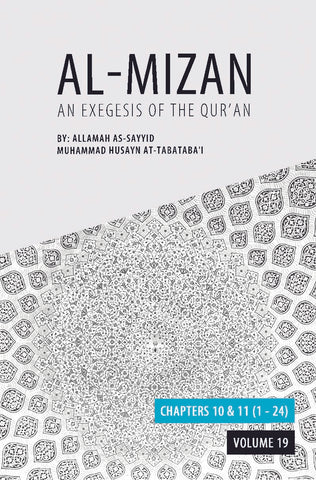
Volume nineteen continues the commentary on Sūrah Yūnus (Chapter 10), covering verses 1–109, and begins the commentary on Sūrah Hūd (Chapter 11). This volume offers profound insights into theological, historical, and ethical dimensions of the Qur’ānic message, focusing on divine guidance, human accountability, and the stories of past prophets. The commentary begins with an exploration of the Qur’ān as a divine revelation (verses 1–20 of Sūrah Yūnus). ʿAllāmah reflects on the challenges faced by the Prophet Muḥammad in conveying the Qur’ānic message, emphasizing the role of reason and reflection in understanding divine guidance. This section critiques the rejection of truth by disbelievers and their reliance on baseless conjecture. A significant portion of this volume is dedicated to the narrative of Prophet Nūḥ (verses 71–74) and the lessons drawn from his unwavering commitment to his mission. ʿAllāmah Ṭabāṭabaʿī examines Nūḥ’s interactions with his community, their rejection of his message, and the eventual consequences of their disobedience. This discussion highlights the broader Qurʾānic theme of divine justice and mercy. The commentary on Sūrah Yūnus also includes reflections on God’s attributes, emphasizing His mercy, omnipotence, and omniscience (verses 31–44).

The most prominent attribute of God in the Holy Quran is His infinite mercy. Of His ninety-nine names, He selected ‘The Compassionate’ and ‘The Merciful’ to introduce Himself to His creation. These attributes are not manifested to their fullest extent in the temporal world due to the limitations that characterize this earthly life; however, the Quranic descriptions paint a vivid picture of the paradisal abode that awaits the righteous. It is these descriptions that have been collected and analyzed throughout this book. The Grand Tour: Quranic Descriptions of Paradise offers the reader a glimpse into a wondrous world that represents the epitome of Divine mercy. Whether it is the splendid palaces, the opulent garments, or the company of the immaculate prophets, this book will walk the reader through each material and spiritual blessing reserved for the believers, as promised by God Almighty Himself.
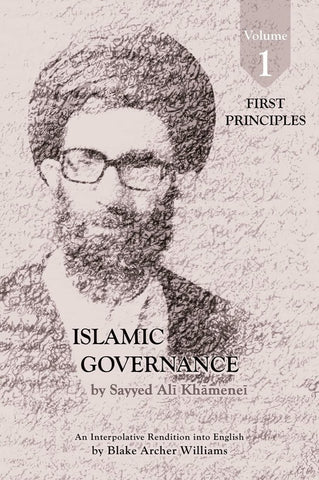
The four volumes of Ayatollah Khamenei’s Islamic Governance provide the theoretical framework for authentic Islamic governance in the modern era that is deeply rooted in Islamic principles and in what makes us human. Authored by one of the foremost theoreticians and practitioners of the revolutionary Islamic movement that culminated in the triumph of the Islamic Revolution in Iran, the book provides a genuine alternative both to the morally bankrupt liberal social order of the West, as well as to the defunct and sterile alternatives provided within the rest of the Islamic world.
First principles (Volume One) begins by an explication of the theological based as to why God reserved the ordering of mankind’s affairs exclusively for Himself, and proceeds to discuss the institution of prophethood. It provides an in-depth definition of the Islamic keyword wilayah and of “those who are invested with authority (the Oul’ul-Amr)”. Ayatollah Khamenei then proceeds to explain the meaning and purpose of the imamate, and ends with a brief survey of the concept of Islamic messianism (mahdawīya) and the effects of believing in the advent of the Mahdi. The reader will obtain a solid undertaking of the theoretical and underpinnings of a system of Islamic governance that is based on principles established in the Holy Quran and authentic Ahadith. While thematically interconnected, each volume stands on its own and can be read as an independent volume.

Glimpses of al-Mīzān serves as an accessible introduction to the profound themes and insights of Tafsīr al-Mīzān, the monumental Qur’anic exegesis by ʿAllāmah al-Sayyid Muḥammad Ḥusayn al-Ṭabāṭabāʾī. This book is a carefully curated collection that distills the essence of the original forty-volume work, making it approachable for contemporary readers unfamiliar with its breadth or scholarly depth. It highlights the theological, philosophical, ethical, and spiritual explorations of ʿAllāmah Ṭabāṭabāʾī while emphasizing his method of integrating intellectual reasoning with faith and his use of the Qur'an as its own interpreter.
Organized thematically, the book covers key concepts like divine attributes, human morality, and the purpose of life. Each essay presents a cohesive exploration of Qur’anic ideas, complete with contextual notes, to ensure clarity for readers at all levels of familiarity with Qur’anic exegesis. By simplifying complex discussions and offering reflections on timeless issues such as justice, free will, and spiritual development, Glimpses of al-Mīzān invites readers to engage deeply with the Qur’anic text under the guidance of one of Islam’s most respected scholars. It aims to bridge the gap between scholarly tradition and contemporary inquiry, inspiring intellectual and spiritual growth in the process.

A journey to explore our innermost thoughts and embark upon an experience to discover faith.
Written by Sayyid Sadek Al-Moussawi, this book eloquently explains Islamic faith and beliefs concisely and in a modern way, covering topics like proofs for the existence of God, the purpose of creation, the need for religion and man as a vicegerent.

Presented here is a general and concise review of the main intellectual, philosophical, and religious elements in the reformation project of Martyr Murtada Mutahhari and the foundations upon which he based his call for the revival of Islamic religious thought.
Shaykh Martyr Murtada Mutahhari was a unique personality distinguished from many of his contemporaries for two main reasons. Firstly, the originality and contemporary relevance of his approach. When one surveys the issues covered by Mutahhari, it is as if one is reviewing today’s contemporary problems rather yhan those of the past. He wrote on topics such as divine justice, social justice, Islamic social movements and the Hijab (Islamic veil), amongst others, all of which continue to be pet intent issues that engage the minds of both the young and old. Secondly, the most notable features of Mutahhari are his openness to contemporary issues and his willingness to plunge into the the depths of the severe challenges confronting religious thought during his time.
What distinguishes Mutahhari from other advocates in this area, however, is that he was simultaneously a reformer and a traditionalist. His defensive role neither drove him towards a closed and introverted outlook nor did his goal of reform lead him to lapse into forsaking core principles. The reader will be left inspired by this unique contribution on the life and thought of perhaps the most extraordinary mind of the 20th century.

Translation missing: en.general.search.loading