
Your cart is empty now.
Your search for "gods emissaries." revealed the following:
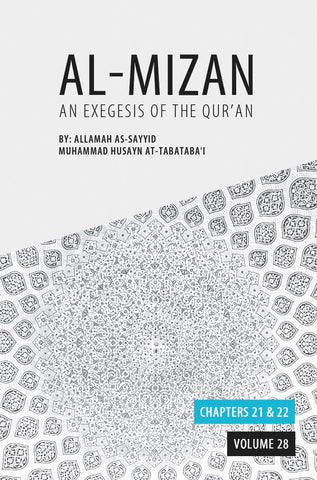
This volume provides a commentary on Sūrah al-Anbiyāʼ (Chapter 21) and Sūrah al-Ḥajj (Chapter 22), focusing on themes of prophethood, divine justice, and moral responsibilities.
The commentary on Sūrah al-Anbiyāʼ emphasizes the universal nature of divine messages and critiques those who deny revelation. Stories of prophets like Moses, Abraham, and Sulaymān illustrate patience, reliance on God, and the consequences of disbelief. Discussions on monotheism, faith, and recognition of God’s signs conclude with reflections on the transient nature of life and the eternal outcomes of deeds.
In Sūrah al-Ḥajj, the depiction of the Day of Judgment underscores human accountability. The significance of ḥajj is explored as a symbol of submission and unity, linked to Prophet Abraham and the Kaʿbah. Themes include divine tests, free will, predestination, and ethical responsibilities.
Philosophical discussions on divine wisdom, worship, justice, and leadership provide practical lessons, offering a holistic view of Qurʾānic teachings. This volume is an invaluable resource for understanding faith, morality, and societal responsibilities in light of contemporary challenges.
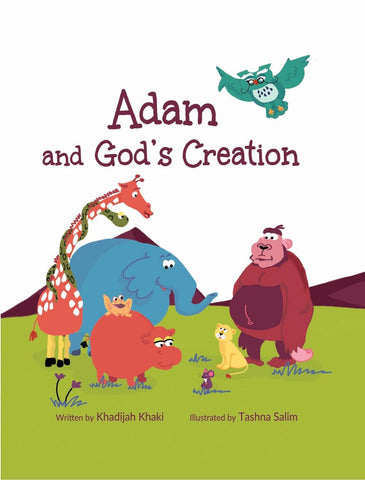
“Do you ever wonder how we all came to be?”
A wise old owl teaches a group of animals about the wonders of God’s creation, focusing on the beauty of equality, uniqueness and cohesion. Get engrossed among the animals and you too can learn about creation.
Dimensions: 8” x 10”
Hardcover, Casebound

Love for God and Love for One Another is part two of the Wings of Unity Series. It consists of a presentation and the discussions afterward delivered at the Sophia University in Loppiano, Italy. It also includes a brief report on the events around Wings of Unity II which was published in the March 2017 issue of Islam Today. The contents of this title can be better understood after reading part one of the Wings of Unity Series, titled: Unity of God and Unity in God.
By: Dr. Mohammad Ali Shomali | ISBN: 9781904934295 | Paperbound

If Christians and Muslims are to live in peace, encouraging one another to grow in holiness and working together for the good of all God's creation, they must move beyond politicized and often negative images of one another. Monastic/Muslim dialogue-issuing from friendship and focused on revelation, prayer, and witness-is an important component in this effort. Indeed, it is essential.
Monastic Interreligious Dialogue is a commission of the Benedictine Confederation that promotes and coordinates dialogue between Catholic monastic men and women and spiritual practitioners of other religious traditions. The organization invited Iranian Shi'a Muslims and Christian monastics to share their faith in a revealing God, their understanding and practice of prayer, and their desire to be witnesses to the world of divine mercy and justice. This book invites readers to listen in and learn from their conversation.
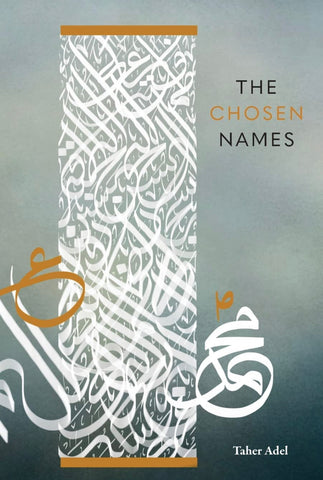
Many of us have grown up glorifying these names, loving these names and pledging allegiance to these names in one form or another. In fact, many of these names have become our names and our children's names. But who are these divine individuals and why are their names such powerful reminders?
The Chosen Names is a poetic exploration of sixteen unassailable personalities from the Household of Mohammed, from the Prophet himself to the awaited Saviour. It is an etymological deep dive into the virtues and divine characteristics of a progeny that is like no other in human history.
Each name tells a story, a wound, a revelation and a prophecy that can be a book in itself but my job as a poet has been to distill their meaning and sentiment into beautiful verses of poetry that can act as reminders for us all. Most of these personalities have more titles and names than what it is included in this book of poetry and certainly there are other personalities from the extended household that could have been explored in a similar light but I have personally selected the sixteen that have helped inspire my poetic journey from a fledgling poet to one that has become obsessed with each letter of their names.

This publication is designed to cater for the spiritual need with a particular emphasis on grooming Muslim mind and thinking. Utmost efforts have been made by the Seminary to put forth in its publications what is really authoritative and authentic in Islam. You are requested to kindly go through this book in the spirit in which it is intended. Propagating the message of Islam is a task which calls for the cooperation of all. Thus it is that we have been able to present this book, small in size but vast in content, to our contemporary youth and the rising generation who have unfortunately been influenced by Western thoughts and culture. We earnestly pray that they may realize their error and return to the Right Path, the path of truth, guidance and light.
CONTENTS:
1) Faith in Allah
2) Scientific Argument
3) Definition of the Methodology and Its Steps
4) Evaluation of Methodology
5) The Philosophical Proof
6) Attributes of Allah
7) General Features of Prophethood
8) Prophethood of Muhammad
9) Role of Effective Factors
10) Islam
11) Worship, A Constant Human Need
12) General Features of the Acts of Worship.
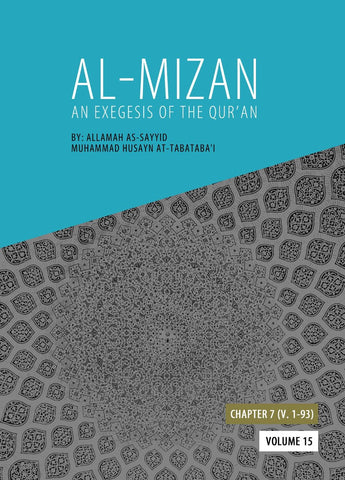
Volume fifteen begins the commentary on Sūrah al-Aʿrāf (Chapter 7), covering verses 1–93. This volume delves into profound theological, ethical, and philosophical discussions while addressing historical narratives and their spiritual significance. ʿAllāmah’s commentary on Sūrah al-Aʿrāf is considered by many scholars as “the peak of al-Mīzān.” The volume opens with an exploration of the Qurʾān as a divine communication (verses 1–2). ʿAllāmah Ṭabāṭabaʿī emphasizes the Qurʾān’s role as both a warning for humanity and a reminder for believers, highlighting its universal applicability and profound moral guidance. The commentary reflects on the concept of divine covenants and humanity’s obligations to adhere to them (verse 3). One of the central themes is the story of the creation of Ādam (a.s.) and the role of Iblīs (verses 10–25). ʿAllāmah provides a detailed analysis of Iblīs’s rebellion and his enmity toward humanity. This section examines philosophical questions regarding free will, predestination, and the rationale behind divine tests. ʿAllāmah critiques simplistic interpretations of these narratives, offering a subtle understanding rooted in Qurʾānic principles and rational inquiry. The commentary addresses broader ethical dimensions, such as the concepts of felicity and wretchedness (verses 26–36). ʿAllāmah reflects on humanity’s dual potential for spiritual elevation or moral downfall, linking this to the nature of divine guidance and human responsibility. The discussion includes an analysis of narrations related to ṭīnah (clay) and its metaphorical implications for human disposition and character.
The historical letter that caused the predicted collapse of communism and brought about the inevitable changes inside the Soviet Union. This small booklet accomodates the very divine message that the leader of the Islamic Republic of Iran during the end of his blessed life wrote to President Mikhail Gorbachev. The main part that makes this booklet a classic are the efforts of the editor. He has painstakingly explained and described the various terms and people mentioned by Imam(ra) over the course of the letter in the footnotes. For example, The Arch Satan, Peripatetic Philosophy, Al-Farabi’s biography and so on.

Revealing the Revelation (which is a translation of the Arabic 'al-Mursal, al-Rasūl wa’l-Risālah') is a profound reflection on how divine guidance reaches humanity—beginning with the Divine Sender, flowing through the Holy Messenger, and culminating in the Message itself.
Written by the martyred scholar Ayatollah Sayyid Muḥammad Bāqir al-Ṣadr (may Allah sanctify his soul), this concise yet powerful treatise presents a rational and systematic case for the necessity of Revelation and Prophethood in Islam. With clarity and intellectual depth, al-Sadr demonstrates how divine communication forms the very foundation of human guidance, morality, and faith.
Accessible and thought-provoking, this work serves as an introduction to the theological vision of one of the greatest contemporary Shia thinkers. It is an essential read for anyone seeking the intellectual foundations of Islamic belief and the timeless relevance of Prophethood in guiding human civilisation.

"By God, the earth is never going to be without the one who rises for God with proof, (be he) either known and manifest or hidden and fearful.
So that the proof of God and His clear evidence is not invalidated." Reported from Imam Ali (as)
Imam Mahdi is the inheritor of the deep knowledge of the Holy Prophet. He is the proof of God and His voice among people.He is truthful and precise in everything. He possesses hukm, a divine mandate, and knowledge of the Names. His presence is necessary to uphold the divine connection between the realm of this world and higher worlds without which the purpose of the creation of humanity-which is to be guided towards perfection by God-would vanish. When he returns, his mission will be to fill the world with justice after it has been filled with oppression. By exploring verses of the Qur'an and the hadith corpus, this book seeks to understand each of these spiritual positions and how Imam Mahdi will accomplish his mission.
Translation missing: en.general.search.loading