
Your cart is empty now.
Your search for "gods emissaries." revealed the following:
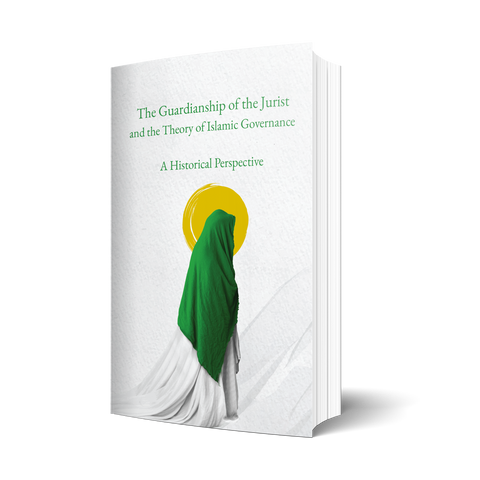
In this book, ʿAllamah Sayyid Jaʿfar Murtaḍā al-ʿĀmilī raises the subject of the guardianship of the jurist and its rational and primordial proofs from a historical aspect.
In Sūrat al-Māʾidah, Verse 55 of the Noble Qurʾān, God (swt) says:
{إِنَّمَا وَلِيُّكُمُ اللَّهُ وَرَسُولُهُ وَالَّذِينَ آمَنُوا الَّذِينَ يُقِيمُونَ الصَّلَاةَ وَيُؤْتُونَ الزَّكَاةَ وَهُمْ رَاكِعُونَ}
{Your guardian is only God, His Apostle, and the faithful who maintain the prayer and give the zakāt while bowing down.}
This noble verse tackled the guardianship of God (swt) and His Messenger (s), in addition to a few believers who possess certain traits and who – after him – attain the guardianship and government over the people.
The author analyzes the position of this verse - from an Islamic viewpoint – in terms of a governmental system which dominates all the affairs, behaviors and movements of the nation, in addition to directing its stances in regards to its life and journey towards its goal. Islam takes care to guide the nation towards this goal, and then realize and acquire it. We only want to make an attempt to know Islam’s opinion in regards to government and the governor, and to see whether it meets any of the proposed theories or others that were known across the nations, or has a new and unique proposal in this field.
Specifications:
~78 pages
B/W pages
5 x 8 in
Softcover

Islamic Perspectives on God and (Other) Monotheism(s) examines the rich and often contested discourse surrounding the belief in God's oneness. Despite being a foundational tenet of faith, this doctrine has been the subject of intense debate across Islamic history, with scholars disagreeing on its precise nature, implications, and theological boundaries. Bringing together leading experts in theology, philosophy, and religious studies, this volume explores how different Islamic traditions have understood God's uniqueness. It addresses key debates surrounding divine attributes, God's relation to creation, and the problem of religious language, alongside the enduring tensions between philosophical reasoning and scriptural interpretations. The book also highlights intra-Muslim disagreements on the meaning of God's oneness, from disputes between Sunni and Shia scholars to competing perspectives within kalām, legal thought, and philosophical theology.
As the first in a three-part series on core Islamic doctrines, this volume offers a comprehensive and nuanced analysis of the belief in divine unity, shedding light on both historical and contemporary discussions. Essential for scholars, students, and those interested in Islamic thought, it showcases the complexity of a doctrine that unites Muslims in belief yet remains a site of deep intellectual and theological engagement.
This book is part of ideological collection of “Youths and Truths” by Ayatullah Ibrahim Amini based on years of delving into religious texts and sources, constant contact with the young generation and pondering over ideological and educational issues.

Part of the Islamic Reference Series books by Shaykh Dr. Mohammad Ali Shomali.


Immerse yourself in the Divine Light and Splendor of the Words of Allāh and spend a few minutes with the Noble Quran. A book which has transformed the lives of billions of people on this Earth since its Divine descent over 1,400 years ago, still plays a prominent role in the lives of close to 2 billion people across this globe. See what the Quran has to say about day to day life, human interaction, economics, political theories, spirituality, worship and countless other practical topics.
This work provides a unique look into the Noble Quran by presenting a commentary meant to stimulate the mind of the reader to get them to think about what Allāh is saying to them. In addition to commenting on the verses, the author provides what we have termed “Take Away Points” which are meant to pique the curiosity of the reader and to get them to think about what they are reading of the Noble Quran - making this a book which is applicable for all times and places.
This booklet features the commentary of Surah 50 - Qaaf.
Tafsir Al-Mizan Volume 30
This volume provides commentary on Sūrah al-Shuʿarāʼ (Chapter 26) and Sūrah al-Naml (Chapter 27), exploring themes of divine justice, prophetic missions, and human accountability. In Sūrah al-Shuʿarāʼ, the struggles of prophets like Moses, Abraham, and Shuʿayb are highlighted, emphasizing the triumph of truth over falsehood and the consequences of rejecting...

The Kingdom of God: The Ethos and Eloquence of Surat Al-Mulk is an invitation to reflect on one of the most powerful and oft-recited chapters of the Quran. While many associate Surat Al-Mulk with moments of grief and remembrance, its message extends far beyond the funeral prayer. This surah is a bold declaration of divine authority, a challenge to human arrogance, and a call to awaken from spiritual complacency.
Through a careful study of its structure, themes, and linguistic precision, this commentary seeks to uncover the surah’s deeper meanings—its warnings, its promises, and its unwavering emphasis on accountability before God.
More than an intellectual exercise, this book is an attempt to bring the Quran to life, to present its verses as they were meant to be experienced: as a living, breathing intercessor that speaks directly to the human soul. For those who seek to engage with the Quran beyond mere recitation, The Kingdom of God offers a roadmap to understanding the ethos and eloquence of this remarkable chapter.

In this book, Āyatullāh Ḥusayn Waḥīd Khurāsānī explores the reality of the First Light and the most perfect mind that is the great Prophet Muḥammad (s), to guide the reader towards understanding their path towards God. In realizing their connection to the Heavens, the reader is connected to the purest creation (s) and his Ahl al-Bayt (as).
Specifications:
~104 pages
B/W pages
5 x 8 in
Softcover

Explicates the cosmology of Ibn al-'Arabi, the greatest mystical thinker of Islamic civilization.
Translation missing: en.general.search.loading