
Your cart is empty now.
Your search for "gods emissaries." revealed the following:

This text is a collection of reflections by Āyatullāh Bahjat on Imām al-Mahdī’s (aj) Reappearance. The central theme compares this awaited event to springtime—a season symbolizing renewal, growth, and the revival of humanity's spiritual, intellectual, and natural life.
This book illustrates how Imām al-Mahdī's (aj) emergence will fulfill God's promise to humanity. It will usher in an era of justice, knowledge, and harmony, rejuvenating mankind's hearts and souls. Āyatullāh Bahjat's words guide readers toward preparation for this moment, emphasizing cultivating piety, seeking divine proximity, and aligning oneself with God's ultimate purpose. In anticipation of this grand reawakening, the book also explores the interconnectedness of humanity and the cosmos, offering a vision of spiritual clarity and inspiration to all those longing for the Imām's Reappearance.
Specifications:
~216 pages
Color pages
5.5x8.5 in
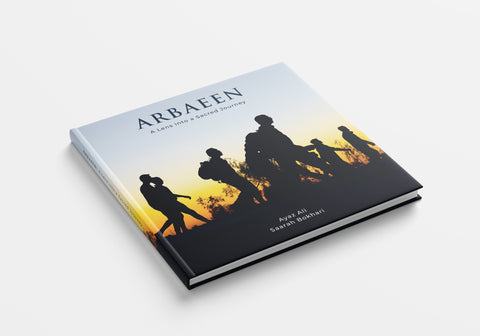
Arbaeen: A Lens into a Sacred Journey is an intricate photo-book combined with first-hand poetic expressions of divine love, following the journey of zuwaar in the World’s Largest Peaceful Gathering.
This documentation follows the annual journey undertaken by millions, from Najaf, throughout the eighty-kilometre walk into Karbala, and the final culmination of forty days of mourning: Arbaeen.
Experience the journey of divine love with the millions.
Photography by: Ayaz Ali
Prose-Poetry: Saarah Bokhari
A percentage of the profits from the sale of the book will go towards helping widows and orphans of Iraq.
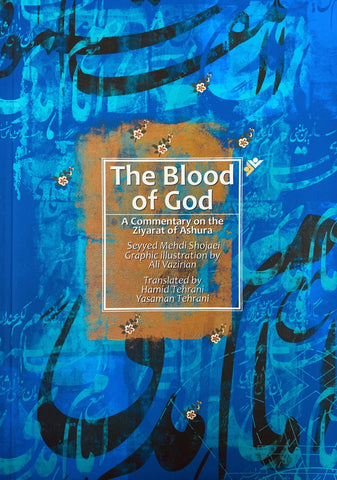
"In an hour of a rising consciousness of Husayn as a singular paradigm of justice who transcends all religious and political barriers, Shojaei's work is a welcome addition to the growing corpus about the Imam." - Christopher Clohessy (Catholic priest, lecturer and author on Shi'i Islam)
Fourteen centuries ago on the plains of Karbala, the martyrdom of Husayn, the grandson of Prophet Muhammad, his family members and his loyal companions took place. It was a calamity of such cosmic proportions that all other tragedies in human history pale in comparison to it.
Since then, Husayn has remained an icon of resistance for all Muslims and even non-Muslims around the world in their fight against the oppressors of their times. Even Mahatma Ghandi professed that he learned from Husayn how to resist colonialism.
This book evokes the sad passages of that tragedy and explains why the bond between the lovers of Husayn and his legacy has gone from strength to strength in history to the point that in our time every year tens of millions from all over the world flock to his shrine to renew their pact with him and declare their disavowal of tyrants in any place or any era.
Seyyed Mehdi Shojaei has published over 100 works such as short stories, plays, novels, screenplays, satirical fiction and children's stories. As a trailblazer in the field of modern religious literature, he has left his indelible imprint on contemporary Iranian culture.
Ali Vazirian is a graphic designer, art director and painter whose work has been exhibited around the world. He is also an award winning director and screenplay writer who has served as a jury at many film festivals.
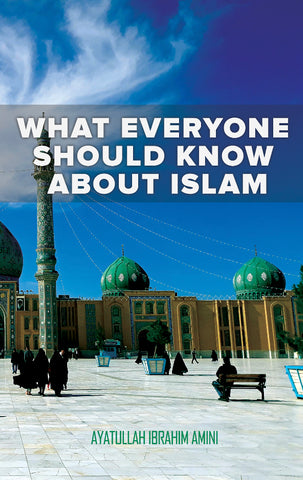
This book focuses on the principles of religion which are relevant to the thought and soul of human beings, reason and intellect follow it, and deeds and movement of human beings spring forth from its fountainhead accordingly.
“Does this world have a Creator and God or has it been created by itself without any cause? If there is a God then what are His attributes and works? Does God assign an obligation for us, or are we not without some from of responsibility? Were the divine messengers truthful in their claims or not? Is it possible that after this world there exists another world whereby a human being would see reward or punishment for his/her deeds? The human faculty of reason in accordance with his primitive nature and special creation desires to find out about these realities, remove curtains from mysteries, provide correct answers to these inquiries and many more alike. It certainly possesses this distinction where it can distinguish between the truth and falsehood, naturally is inclined to discover the realities, causes of things, and until it rests upon an absolute certainlyit does not feel comfortable.”
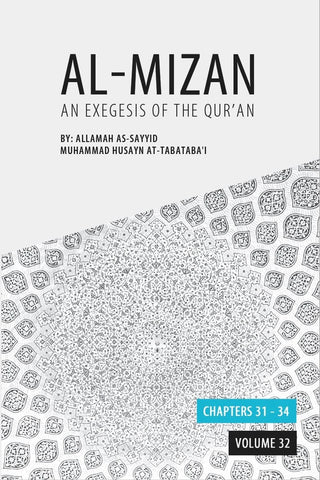
Volume thirty-two provides a comprehensive commentary on Sūrah Luqmān (Chapter 31), Sūrah al-Sajdah (Chapter 32), Sūrah al-Aḥzāb (Chapter 33), and Sūrah Sabaʼ (Chapter 34). These chapters explore key themes such as divine wisdom, the Day of Judgment, societal ethics, and historical lessons. In Sūrah Luqmān, ʿAllāmah focuses on the wisdom imparted by Luqmān to his son, particularly his exhortation to avoid polytheism, ascribing it as a great injustice. This chapter emphasizes gratitude towards God and one’s parents, reflecting on the ethical and spiritual principles that underpin human relationships. ʿAllāmah also examines the broader themes of divine unity and accountability, calling for reflection on God’s signs in creation and the natural world. The narrative of Luqmān is presented as a model of practical wisdom and moral clarity. Sūrah al-Sajdah shifts the focus to the origins and destiny of humanity. ʿAllāmah explores the creation of human beings, the gift of the divine spirit, and the ultimate return to God. The chapter’s eschatological themes include vivid descriptions of resurrection and divine recompense. He reflects on the Qur’ānic view of human life as a journey shaped by actions and decisions, underscoring the significance of faith and righteous deeds. In Sūrah al-Aḥzāb, the commentary addresses societal challenges and the ethical responsibilities of the nascent Muslim community in Medina. ʿAllāmah discusses the rules and expectations for the Prophet’s household, the Battle of Khandaq, and the importance of unity and discipline in the face of external threats. This chapter emphasizes the virtues of modesty, respect, and the centrality of the Prophet’s leadership. ʿAllāmah provides an in-depth analysis of the verse of purification (āyah al-taṭhīr, 33:33) and the divine blessings upon the Prophet’s household. The commentary on Sūrah Sabaʼ highlights the interplay between human actions and divine blessings. The chapter recounts the story of the people of Sabaʼ, who fell into disobedience despite their prosperity, resulting in their downfall. ʿAllāmah reflects on the lessons drawn from this narrative, emphasizing gratitude, humility, and the transient nature of worldly power. The chapter also discusses the unique gifts bestowed upon Prophets Dāwūd and Sulaymān, illustrating the ethical use of power and knowledge in service to God. Throughout this volume, ʿAllāmah integrates theological, ethical, and historical discussions, offering a nuanced understanding of the Qur’ānic worldview. Subtle topics include the nature of divine wisdom, the ethical dimensions of leadership, and the spiritual lessons derived from historical narratives. He consistently ties these themes to practical guidance for individuals and societies. Volume thirty-two of Tafsīr al-Mīzān provides profound insights into the Qur’ān’s teachings on faith, morality, and the human-divine relationship.


The very heart of the Islamic tradition is love; no other word adequately captures the quest for transformation that lies at this tradition’s center. So argues esteemed professor of medieval Islam William C. Chittick in this survey of the extensive Arabic and Persian literature on topics ranging from the Qur’an up through the twelfth century. Bringing to light extensive foundational Persian sources never before presented, Chittick draws on more than a thousand pages of newly translated material to depict the rich prose literature at the center of Islamic thought.

This book is based on three lectures delivered by Dr. Mohammad Ali Shomali on 8th to 10th July 2016 at Sophia Institute University in Loppiano, Italy in the first round of Wings of Unity project. In this book, the author discusses significance of unity of God in different aspects of islamic thought and then goes on exploring God's plan in His creation and legislation for establishing unity among mankind. The book ends with reflections about end of the time and coming of Imam Mahdi and Jesus and their collaboration in establishing universal peace and justice.

Embark on an engaging handwriting journey with this workbook designed to enhance your child's skills while fostering a deep connection to faith and character development.
This unique workbook combines handwriting practice with colouring, drawing, poetry, and activities, incorporating Quran verses, ahadith, quotes, and sentences to instil a love for God, His messenger, and the 14 infallible.
Each page encourages the development of good character morals, ethical values, gratitude, affirmations, and creativity, creating a holistic approach to handwriting practice. This workbook aims to plant the seeds of unconditional love and unwavering faith in your child's heart towards the Most Merciful Creator.
Enjoy every lesson as your child discovers the joy of handwriting intertwined with faith and character enrichment.
87 Pages
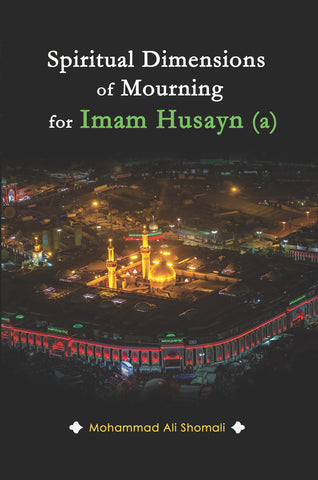
This book comes in three chapters. The first chapter studies the divine plan for human salvation. Issues such as meeting God and journeying towards Him, the goodly life (al-hayat al-tayyibah) and its requirements, provision for this journey and suffering as a shortcut are discussed. The second chapter studies the role of sharing Imam Husayn's hardship in the spiritual journey. The third chapter studies the signs and method of attaining the goodly life (al-hayat al-tayyibah). The fourth and final chapter studies the essence and outcomes of mourning for Imam Husayn (a).
Translation missing: en.general.search.loading