
Your cart is empty now.
Your search for "gods emissaries." revealed the following:
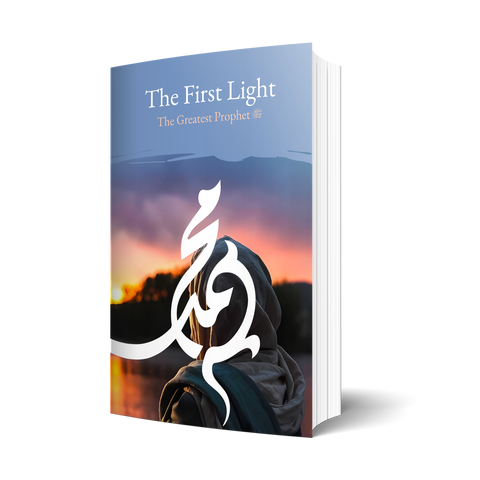
In this book, Āyatullāh Ḥusayn Waḥīd Khurāsānī explores the reality of the First Light and the most perfect mind that is the great Prophet Muḥammad (s), to guide the reader towards understanding their path towards God. In realizing their connection to the Heavens, the reader is connected to the purest creation (s) and his Ahl al-Bayt (as).
Specifications:
~104 pages
B/W pages
5 x 8 in
Softcover

Explicates the cosmology of Ibn al-'Arabi, the greatest mystical thinker of Islamic civilization.

Immerse yourself in the Divine Light and Splendor of the Words of Allāh and spend a few minutes with the Noble Quran. A book which has transformed the lives of billions of people on this Earth since its Divine descent over 1,400 years ago, still plays a prominent role in the lives of close to 2 billion people across this globe. See what the Quran has to say about day to day life, human interaction, economics, political theories, spirituality, worship and countless other practical topics.
This work provides a unique look into the Noble Quran by presenting a commentary meant to stimulate the mind of the reader to get them to think about what Allāh is saying to them. In addition to commenting on the verses, the author provides what we have termed “Take Away Points” which are meant to pique the curiosity of the reader and to get them to think about what they are reading of the Noble Quran - making this a book which is applicable for all times and places.
This booklet features the commentary of Surah al-Najm - #53 of the Quran.

The Essence of Religion by al-Sayyid Muhammad Baqir al-Sistani is an enlightening exploration of the fundamental truths that underpin the Islamic faith. Written by the son of the highly respected Shia religious authority, Grand Ayatollah Sayyid Ali al-Sistani, this book addresses the core questions of existence, the nature of the Creator, and humanity’s purpose in life. It offers a comprehensive yet accessible understanding of Islamic theology and philosophy, providing readers with deep insights into the relationship between the Divine and human beings.
This book is a must-read for anyone seeking to deepen their understanding of Islam, whether they are scholars, students, or individuals on a spiritual journey.
The Essence of Religion makes these profound teachings available to the English-speaking world, offering both intellectual depth and spiritual guidance. With its clear and engaging writing, this work invites readers to reflect on their faith, enrich their spiritual lives, and engage with timeless questions that remain as relevant today as ever.

Tafsir Al-Mizan Volume 40
Volume forty of Tafsīr al-Mīzān by ʿAllāmah Muḥammad Ḥusayn Ṭabāṭabāʾī concludes his monumental exegesis, covering Sūrah al-Nabaʾ (Chapter 78) through Sūrah al-Nās (Chapter 114). This volume encapsulates key theological, eschatological, and ethical themes while offering profound reflections on the Qur’ānic message as a whole. The commentary begins with Sūrah al-Nabaʾ,...
The fourth volume of the English translation continues the commentary on Sūrah al-Baqarah, covering verses 224–286, and explores topics such as divine guidance, interpersonal ethics, and the foundations of Islamic legislation. This volume extensively discusses the rights and responsibilities within marriage and divorce (verses 224–242), emphasizing fairness and preserving the dignity of all parties involved. ʿAllāmah Ṭabāṭabaʿī examines the rights of women in Islam, providing comparative insights into their status across civilizations and explaining how Islamic teachings transformed their societal roles. The philosophical and ethical dimensions of financial transactions, including the prohibition of usury (ribā) and the encouragement of spending in the way of God, are comprehensively explored (verses 261–274). The discussion on spending in the way of God emphasizes the Qur’ān’s emphasis on selflessness and the socio-economic benefits of charity. ʿAllāmah Ṭabāṭabaʿī highlights how acts of giving cultivate spiritual growth and purify wealth while simultaneously addressing societal inequalities.
Volume sixteen continues the commentary on Sūrah al-Aʿrāf (Chapter 7), covering verses 94–206. This volume provides deep insights into divine customs, ethical principles, and spiritual realities, as well as addressing key theological discussions. The commentary begins with reflections on divine trials and their purpose (verses 94–102). ʿAllāmah Ṭabāṭabaʿī examines how hardship and ease serve as tests from God to guide humanity back to the straight path. He elaborates on the concept of divine “plotting” (makr) and the consequences of ingratitude and heedlessness in human communities. A central theme in this volume is the story of Prophet Moses and the Israelites (verses 103–160). ʿAllāmah provides a detailed analysis of Moses’s mission to confront Pharaoh and liberate the Children of Israel. He highlights the challenges faced by Moses, the repeated denial of truth by Pharaoh and his people, and the ultimate triumph of divine will. The commentary explores the moral and spiritual lessons derived from these events, such as the consequences of arrogance, the significance of patience, and the role of divine support in overcoming oppression. One of the most profound discussions in this volume is the request of Moses (a.s.) to see God (verse 143). ʿAllāmah explores the theological implications of this event, explaining the Qurʾānic stance on the impossibility of perceiving God through sensory means.
This volume provides a commentary on Sūrah al-Anbiyāʼ (Chapter 21) and Sūrah al-Ḥajj (Chapter 22), focusing on themes of prophethood, divine justice, and moral responsibilities.
The commentary on Sūrah al-Anbiyāʼ emphasizes the universal nature of divine messages and critiques those who deny revelation. Stories of prophets like Moses, Abraham, and Sulaymān illustrate patience, reliance on God, and the consequences of disbelief. Discussions on monotheism, faith, and recognition of God’s signs conclude with reflections on the transient nature of life and the eternal outcomes of deeds.
In Sūrah al-Ḥajj, the depiction of the Day of Judgment underscores human accountability. The significance of ḥajj is explored as a symbol of submission and unity, linked to Prophet Abraham and the Kaʿbah. Themes include divine tests, free will, predestination, and ethical responsibilities.
Philosophical discussions on divine wisdom, worship, justice, and leadership provide practical lessons, offering a holistic view of Qurʾānic teachings. This volume is an invaluable resource for understanding faith, morality, and societal responsibilities in light of contemporary challenges.
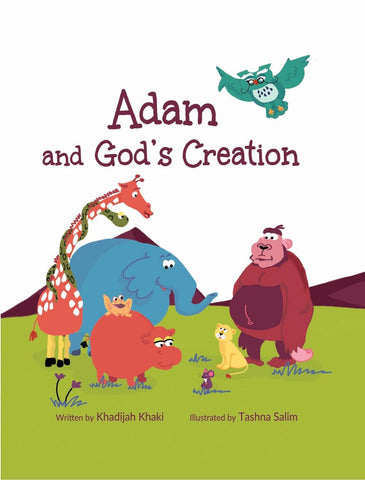
“Do you ever wonder how we all came to be?”
A wise old owl teaches a group of animals about the wonders of God’s creation, focusing on the beauty of equality, uniqueness and cohesion. Get engrossed among the animals and you too can learn about creation.
Dimensions: 8” x 10”
Hardcover, Casebound
Translation missing: en.general.search.loading