
Your cart is empty now.
Your search for "gods emissaries." revealed the following:
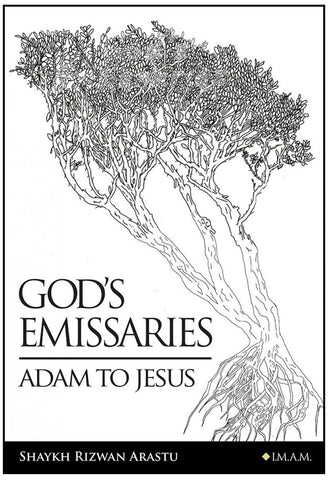
The book before you is the first of its kind. It has elevated the genre of Prophetic stories to new heights. Rather than simply collecting and translating scripture and traditions, God’s Emissaries: Adam to Jesus presents a comprehensive, theologically sound, captivating, and believable set of stories. It portrays God’s prophets as the heroes they were, possessed of the most stellar of human traits, exemplary in every aspect of their being.
God’s Emissaries weaves together every Qur’anic verse and every plausible tradition that has come down to us from Prophet Muhammad and his family into an epic story of God’s tireless efforts to guide humankind.

Description
Explore the spiritual insights and enduring lessons found in the life of Prophet Idrīs in the second volume of Whom God Has Guided: Stories and Teachings of the Prophets (as). This volume presents the prophets not merely as figures of history, but as divinely guided examples whose lives illuminate faith, purpose, knowledge, and humanity’s journey toward God.
Through the Qurʾānic portrayal and transmitted teachings concerning Prophet Idrīs (as), readers encounter a prophet renowned for his connection to knowledge, writing, and spiritual elevation. The book examines his mission as described in the Qurʾān and Islamic tradition, including his association with wisdom and learning, his distinction as the first writer, and his honoured rank before God.
More than a historical account, Prophet Idrīs (as) offers a reflective study of faith and obedience. It invites readers to consider how devotion, knowledge, and steadfastness can guide the human soul closer to God.
About the Author
Hujjat al-Islām Muhammad Riḍā ʿĀbidīnī is a distinguished scholar of Islamic mysticism and a respected specialist in Islamic philosophy, theology, and Qur’anic exegesis. After studying at the Qom Seminary, he learned from leading scholars, including Ayatullah Bahāʾ al-Dīnī, Ayatullah Muhammad-Taqī Bahjat, and ʿAllāmah Ṭabāṭabāʾī.
His academic work focuses on the thought and writings of ʿAllāmah Ṭabāṭabāʾī, particularly in the areas of Qur’anic exegesis and philosophy. He has taught at leading universities, including Tehran University, and has been a teacher at the Qom Seminary since 1996.
Specifications:
~354 pages
Color pages
5.5x8.5 in
Softcover

Mafātīḥ al-Ḥayāt (Keys to Life), by Āyatullāh ʿAbdullāh Jawādī Āmulī, is a seminal work that complements Shaykh ʿAbbās Qummī’s Mafātīḥ al-Jinān. While Mafātīḥ al-Jinān focuses on worship, supplication, and the soul’s connection with God, Mafātīḥ al-Ḥayāt turns to the broader tapestry of human life—outlining how divine guidance shapes our relationship with ourselves, with other people, with the governing order, with the animal world, and with the environment. Drawing on the Noble Qurʾān, authentic ḥadīth, and reason, the author presents a comprehensive ethical and practical program for living a God-centered life in all dimensions.
The work moves from exploring the refinement of the self—through reflection, the pursuit of knowledge, self-discipline, health, and inner virtue—to the ethics of social bonds, including the responsibilities of kinship, marriage, and community life. It then examines civic and political engagement, emphasizing justice, the rights and duties of rulers and citizens, and economic fairness. The guidance extends to compassionate conduct toward animals and to environmental care, urging the preservation of nature’s balance and beauty. The concluding section reflects on time, tradition, and the spiritual principles that give coherence and meaning to a believer’s life.
Mafātīḥ al-Ḥayāt blends moral instruction, social guidance, and spiritual insight into a unified vision, showing that servitude to God is inseparable from justice, compassion, and responsibility in worldly affairs. It is at once a manual of personal growth, a guide to harmonious social living, and a call to stewardship of the world—offering readers a path toward both worldly wellbeing and eternal success.
Specifications:
~532 pages (Vol I)
~482 pages (Vol II)
Color pages
6x9 in
Hardcover with Dust Jacket

Explore the life lessons and teachings of Prophet Ādam (as) in the first volume of the enlightening series, Whom God Has Guided: Stories and Teachings of the Prophets (as).
In this work, the reader is guided through the narrative of Prophet Ādam (as), uncovering deep theological, ethical, and existential insights embedded within his story as conveyed in the Qurʾān. The book illustrates how the lives of prophets (as) serve as manifestations of divine guidance, with Prophet Ādam (as) representing humanity’s foundational journey of faith, repentance, and return to God (swt).
This volume is the gateway to a series that seeks to portray the prophets not merely as historical figures but as archetypes of the complete Muḥammadan personality. It emphasizes their collective role as signs pointing toward the ultimate knowledge and representation of God’s will on Earth.
Specifications:
~386 pages
Color pages
5.5x8.5 in
![True Servitude and the Reality of Knowledge [PBK]-al-Burāq](http://al-buraq.org/cdn/shop/products/61XPf86GfwL_large.jpg?v=1610004731)
This masterpiece is an exegesis of the well-known code of spiritual instruction taught by Imam Ja'far al-Sadiq ('a), the sixth Divine Appointed successor and the grandson of Muhammad (s) to a seeker of true knowledge called Unwan al-Basri. It is a prescription that if reflected upon and applied in our lives can facilitate our ascension to the Divine Realm of Majesty and Beauty.

This book delves into the multifaceted significance of Lady Fāṭimah (as) within Islāmic tradition. It begins by elucidating the pivotal role of the Ahl al-Bayt (as) as guides for humanity, highlighting Sayyidah Fāṭimah’s (as) unique position as both a reflection of the Ahl al-Bayt’s essence and an exemplar transcending gender and era. The subsequent chapters meticulously explore Sayyidah Fāṭimah’s (as) virtues, her portrayal in the Qurʾān as a symbol of purity and divine grace, and her impact on knowledge, education, and societal norms.
Central to the book’s narrative is the portrayal of Sayyidah Fāṭimah (as) as an exemplary figure whose life and teachings serve as a beacon of guidance for believers. The author presents Sayyidah Fāṭimah (as) as a paragon of virtue, wisdom, resilience, and moral fortitude. The exploration extends beyond historical recounting, delving into the philosophical and theological significance of Sayyidah Fāṭimah’s (as) role within Islāmic thought and practice.
Specifications:
~304 pages
Color pages
5.5x8.5 in

These books incorporate different ayaat repeatedly into the stories enabling children to learn, understand, memorise and live the divine words of Allah (swt).
A set of 3 books.
Number of pages – 20 – 24
Hardback Cover.
Activities at the end of the book.
For ages 6 and under.
Book 1: Join little Husna as she learns from Angel Asmaa how to be kind to her parents!
Book 2: Angel Asmaa is taking Husna on a tour of the world. Join them as they see all the beautiful creations Allah (swt) has made and say:
!فَتَبَارَكَ اللَّهُ أَحْسَنُ الْخَالِقِينَ
Book 3: Husna loves playing hide-and-seek! She can hide from her friends, but can she hide from Allah (swt)?
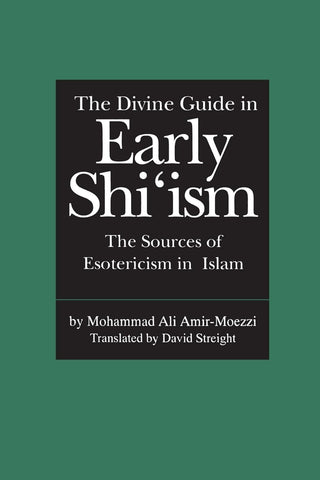
The Imam, the Divine Guide, is the central point around which the Shi'ite religion turns. The power of Shi'ism comes from the actions of the Imam. This title is reserved exclusively for the sucessors of the prophets in their mission. The author shows that from the beginning of Shi'ite Islam until the tenth century, the Imam was primarily a master of knowledge with supernatural powers, not a jurist theologian. The Imam is the threshold through which God and the creatures communicate. He is thus a cosmic necessity, the key and the center of the universal economy of the sacred.
The author presents Shi'ism as a religion founded on double dimensions where the role of the leader remains constantly central: perpetual initiation into divine secrets and continued confrontation with anti-initiation forces. Without esotericism, exotericism loses its meaning. Early Imamism is an esoteric doctrine. Historically, then, at the beginning of esotericism in Islam, we find an initiatory, mystical, and occultist doctrine. This is the first book to systematically explore the immense literature attributed to the Imams themselves in order to recover the authentic original vision. It restores an essential source of esotericism in the world of Islam.

This beautiful coffee-table book is a must have for every Muslim household. Connect to The Divine Names of God through Taher Adel’s stunning poetry and lose yourself in Aadil Abedi’s mesmerising artwork.
Translation missing: en.general.search.loading